

Lindos Acropolis Highlights: What to See Inside the Site
2 January 2026
Things to Avoid at Lindos Acropolis
10 January 2026
Table of Contents
Introduction
Lindos Acropolis history does not follow a neat, linear path. The hill was never shaped by a single plan or a single era. Instead, it kept changing purpose, meaning, and appearance, depending on what Lindos needed at any given time. Looking at these key moments helps visitors understand why the site feels layered rather than uniform.
What follows is not just a timeline, but a way to read the Acropolis as a place that adapted again and again.
1. Before the Acropolis: Early Lindos
Before temples or fortifications existed on the hill, Lindos was already an active settlement. Its position near the sea made it important for movement, trade, and communication.
The rock above the town stood out long before construction began. Height mattered, even then.
2. The Rise of Athena Lindia
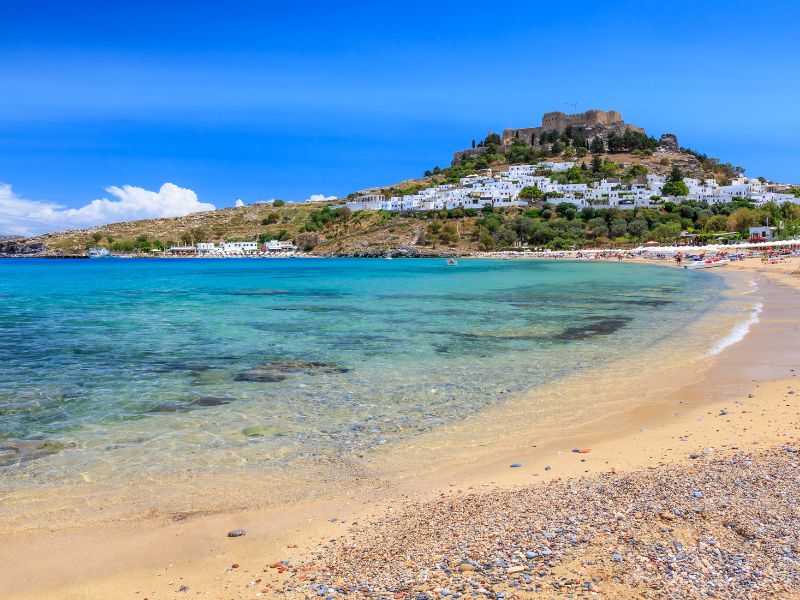
A crucial turning point in Lindos Acropolis history came when the hill became associated with Athena Lindia. A sanctuary slowly formed at the summit.
This did not happen all at once. Over time, worship and offerings gave the place a sacred identity that outlasted political changes.
3. Lindos in the Classical Period
During the Classical era, Lindos gained confidence as a city-state. The sanctuary expanded, and the Acropolis became a symbol that combined religion and civic pride.
What mattered was not just belief, but visibility. The hilltop made a statement.
4. Hellenistic Expansion and Monumental Design
The Hellenistic period reshaped the Acropolis more than any other phase. Large-scale planning turned the summit into a monumental space.
Much of what visitors recognize today, especially the sense of order and scale, comes from this period. It was designed to be seen, particularly from the sea.
5. Roman Lindos and Continuity
Roman control did not bring disruption here. The sanctuary continued to function, and the Acropolis remained active.
Administrative systems changed, but the Romans largely worked around what already existed. Continuity mattered more than replacement.
6. From Sanctuary to Strategic Stronghold
Gradually, priorities shifted. Height that once served worship also served defense.
This transition was slow, not sudden, but it marked a clear change in how the Acropolis was understood and used.
7. The Medieval Fortifications
The medieval period left some of the most visible marks on the site. Under the Knights of Saint John, Lindos Acropolis became a fortified stronghold.
Ancient walls were reinforced rather than removed. That decision is why the site feels layered instead of cleanly divided by period.
8. Decline and Changing Use
Eventually, the Acropolis lost its strategic importance. As threats diminished, maintenance declined.
Structures deteriorated. Stones were reused. The hilltop became quieter, both physically and politically.
9. Rediscovery and Preservation

Modern interest brought Lindos Acropolis history back into focus. Archaeological work aimed to stabilize the site, not recreate it.
Preservation here meant accepting complexity rather than simplifying it.
10. Lindos Acropolis Today
Today, Lindos Acropolis is not a monument frozen in one era. It is a place shaped by reuse, adaptation, and survival.
Visitors walk through a landscape where religion, power, and defense overlap rather than replace one another.
Why Lindos Acropolis History Matters When You Visit
Knowing the Lindos Acropolis history changes how the site feels. Walls stop looking random. Terraces begin to make sense.
With context, the Acropolis becomes more than a viewpoint. It becomes a record of how Lindos responded to changing needs across centuries.
